

Irish firms embrace AI despite rising risk exposure
Tue, 24th Nov 2026 (Today)
Some 74% of Irish service companies surveyed use artificial intelligence in their daily work, according to Hiscox. The insurer's research also found that 53% had experienced an AI-related incident or near miss.
The Irish results are based on a survey of 500 service-sector respondents and form part of a wider Statista study of 4,520 respondents across nine European markets.
According to the study, AI use has moved beyond trial projects into routine business tasks. Irish respondents said companies were using the technology for translation, research and text, while more than half also reported its use in IT operations and system infrastructure, product and service development, customer service, process automation and internal workflows, and marketing and sales.
The survey also pointed to business gains. Among Irish respondents, 88% said AI had a positive impact on productivity, 76% reported a positive effect on competitiveness and 74% said it had improved time-to-market.
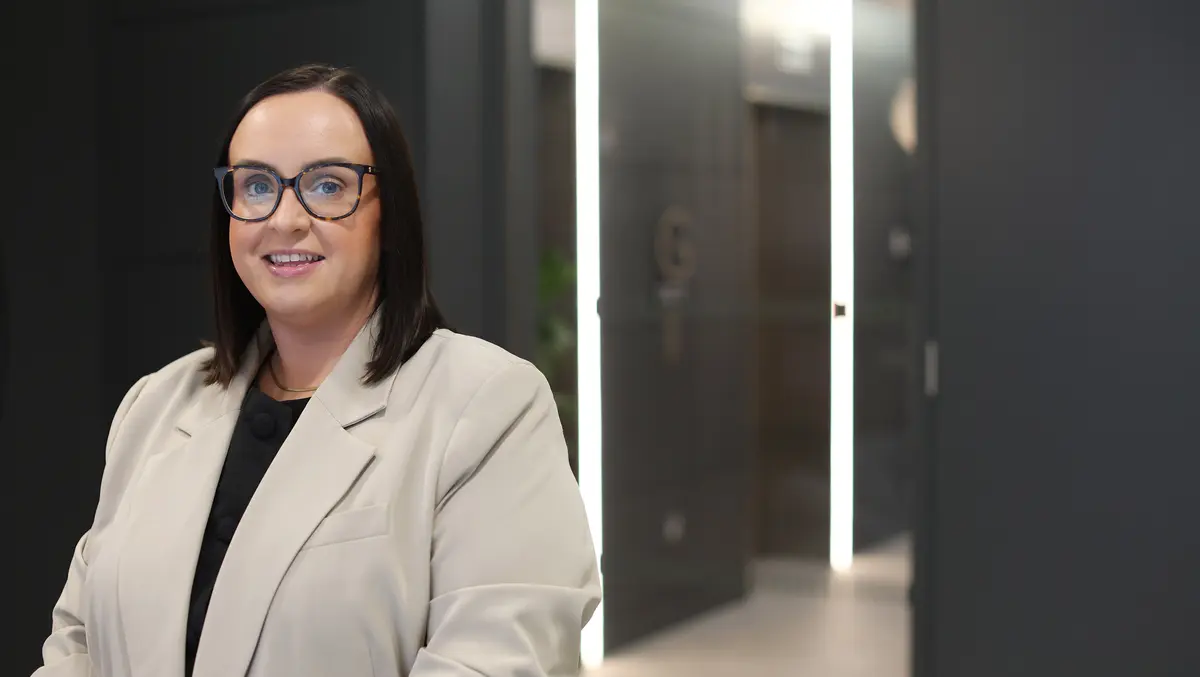
Ciara Weldon, Senior Development Underwriter at Hiscox Ireland, said: "AI is no longer a future issue for many Irish service companies. It is already being used in day-to-day work and across core business functions, from customer service and marketing to IT operations and product development."
She added: "The opportunity for businesses is significant, particularly around productivity, competitiveness and speed. However, as AI becomes more embedded in everyday operations, it is also creating new exposures and changing existing ones. Businesses need to be clear about where AI is being used, what controls are in place and how those risks are being managed."
Controlled use
The research suggests Irish companies are taking a relatively cautious approach to the AI tools they allow staff to use. Some 41% of Irish respondents said their company uses only licensed or company-specific AI solutions, compared with 32% across the full European sample.
Ireland also recorded the lowest share of respondents saying their company relies only on freely available AI tools, at 24%. More than half of Irish respondents, or 54%, said they believe customers expect businesses to use AI, compared with 47% across the full sample.
Weldon said: "AI adoption is not only being driven by internal efficiency. For many businesses, it is increasingly linked to customer expectations, service delivery and competitiveness. That makes it even more important that AI is introduced in a considered way, with appropriate oversight and clear internal responsibilities."
Risk exposure
The figures also show AI-related problems have already emerged for many companies. In Ireland, 7% of respondents reported incidents that led to direct financial losses, while 24% reported incidents without direct financial loss, including reputational damage or extra internal work. A further 22% said they had detected near misses in time, while 43% said they had seen no AI-related incidents so far.
Respondents also identified a range of concerns linked to the technology. Data privacy and security were cited by 53%, followed by legal and regulatory risks at 50%, intellectual property risks at 48%, IT security risks at 48% and ethical risks at 43%.
Weldon said: "The message is not that businesses should slow down AI adoption. The message is that adoption needs to be matched by governance, training, controls and a clear understanding of where risks may arise.
"For service-sector companies and SMEs more broadly, AI may be used by different teams in different ways. That can create uncertainty around data, accountability, client information, intellectual property, regulatory exposure and the quality of outputs. Businesses do not need to become AI specialists overnight, but they do need to understand how AI is being used and where the potential exposures sit."
Boundaries and cover
Many respondents said their companies were drawing clear lines around sensitive uses of AI. The survey found that 35% exclude AI from human resources decisions, 34% from processing personal data, 32% from financial and risk management, and 28% from strategic corporate decisions. Only 19% said there were no areas from which AI is fundamentally excluded.
The study also found strong interest in insurance tied to AI risks. Half of Irish respondents said they were aware of relevant insurance offerings, while 37% said their company was already insured against AI-related risks. Another 39% said they were not currently insured but would be interested in suitable cover, taking the combined figure to 76%.
Weldon said: "The businesses making the greatest progress with AI are likely to be those that combine opportunity with responsibility. That means using approved tools, setting clear boundaries, training employees and reviewing how existing risk and insurance arrangements reflect the way AI is actually being used.
"The level of awareness and interest in insurance protection highlighted by this study is particularly interesting. It suggests that businesses are already recognising the need to consider how AI-related risks could affect them, rather than waiting until something goes wrong.
"For SMEs in particular, these findings create an opportunity for meaningful conversations with their insurance brokers about where AI is being used, what exposures may arise and how those risks are being managed."