

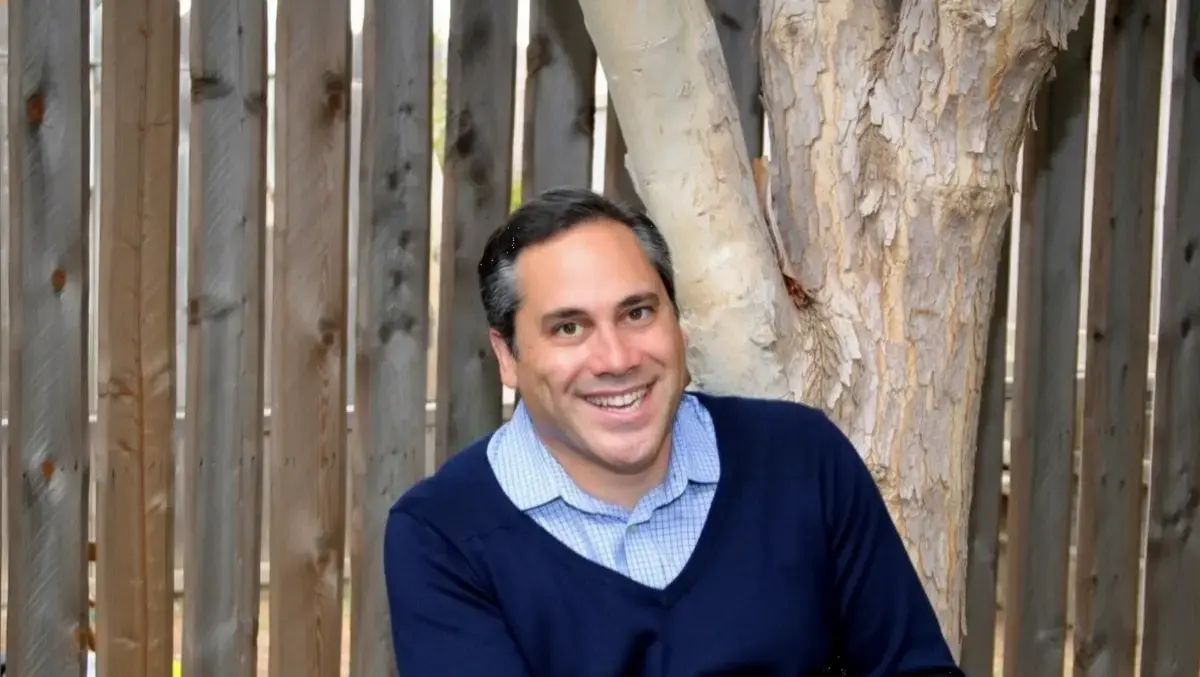
TrustScale launches Argus to tackle AI hallucinations
Wed, 5th Aug 2026 (Today)
TrustScale has launched Argus, a verification tool for AI-generated output designed to detect and correct hallucinations in responses produced by large language models.
Argus is aimed at businesses using generative AI in research, content creation, automation and decision-making, where factual errors can create operational and financial risk. The system reviews claims against source evidence through deterministic verification rather than asking another AI model to assess the output.
The launch comes as concerns over AI hallucinations remain a central issue for companies deploying generative systems in sensitive workflows. TrustScale cited research showing that hallucination rates vary by task and can rise sharply in specialist domains, including legal work.
According to TrustScale, Argus can verify claims up to 135 times faster than manual research and improve output accuracy by up to 98.5%. The system works in real time by flagging unsupported claims, presenting evidence that supports or contradicts them, and suggesting corrections before content is used or published.
TrustScale is positioning the product as an alternative to approaches in which one model reviews another. It argues that such methods can reproduce the same failure mode they are meant to identify because both systems remain prone to fabrication and unsupported assertions.
In practice, Argus adds colour-coded TrustScore highlights to AI-generated text and provides inline correction suggestions. The product is available in 12 languages for enterprise users, while individual users can access it through a research preview and a Chrome extension.
Market pressure
The market for AI assurance tools has grown as organisations try to balance the speed benefits of generative AI with governance demands. Businesses in healthcare, legal services and academia have faced scrutiny over the use of AI in settings where inaccurate answers can lead to flawed analysis, reputational damage or direct harm.
TrustScale also pointed to external research showing that many users do not routinely check claims generated by AI systems. That has added urgency for buyers seeking software that can assess model output before it reaches staff, customers or public channels.
Lawrence Snapp, Chief Executive Officer of TrustScale, said the challenge for businesses now lies less in making AI more capable and more in making it reliable enough for practical use.
"The AI industry spent years making AI smarter, but trustworthy AI is the bigger problem to solve now," said Lawrence Snapp, Chief Executive Officer of TrustScale.
"AI is probabilistic by design, but enterprises are responsible for the costs and risks of AI mistakes. Argus mitigates the problem by providing independent evidence before users act on generative AI outputs," Snapp said.
TrustScale said the software can be installed in private and public data environments and used alongside major AI models including ChatGPT, Claude, Gemini, Copilot and Grok. That reflects growing demand from companies that want monitoring and control systems without replacing the models they already use.
Deterministic focus
Argus is built on the TrustScale Engine, which the company describes as a system for continuous AI assurance across workflows. TrustScale traces the product to more than two decades of work in AI data and language coverage spanning more than 200 languages.
That emphasis on deterministic checking highlights a broader debate within the AI industry over how to verify machine-generated content. While model-based reviewers may be easier to deploy, critics argue they struggle to provide auditable evidence trails and can fail in ways that are difficult to predict.
Independent experts have also raised concerns about leaving factual adjudication to model providers themselves. Questions around conflicting evidence, contested interpretations and domain-specific nuance have become more prominent as AI systems move into regulated or high-stakes environments.
Dominique Shelton Leipzig, Chief Executive Officer of Global Data Innovation, commented on the need for independent review tools as organisations place more consequential work in the hands of AI systems.
"AI makers claim to be safer for you, self-governing or truth-seeking. But conflicting evidence, varying perspectives, nuanced language and independent assurance matter when it comes to AI," said Dominique Shelton Leipzig, Chief Executive Officer of Global Data Innovation.
"TrustScale's Argus is the first real-time, continuous assurance platform that empowers humans with evidence and enables trustworthy AI. The AI stakes are too high to let a few big models dictate your truth," Leipzig said.