

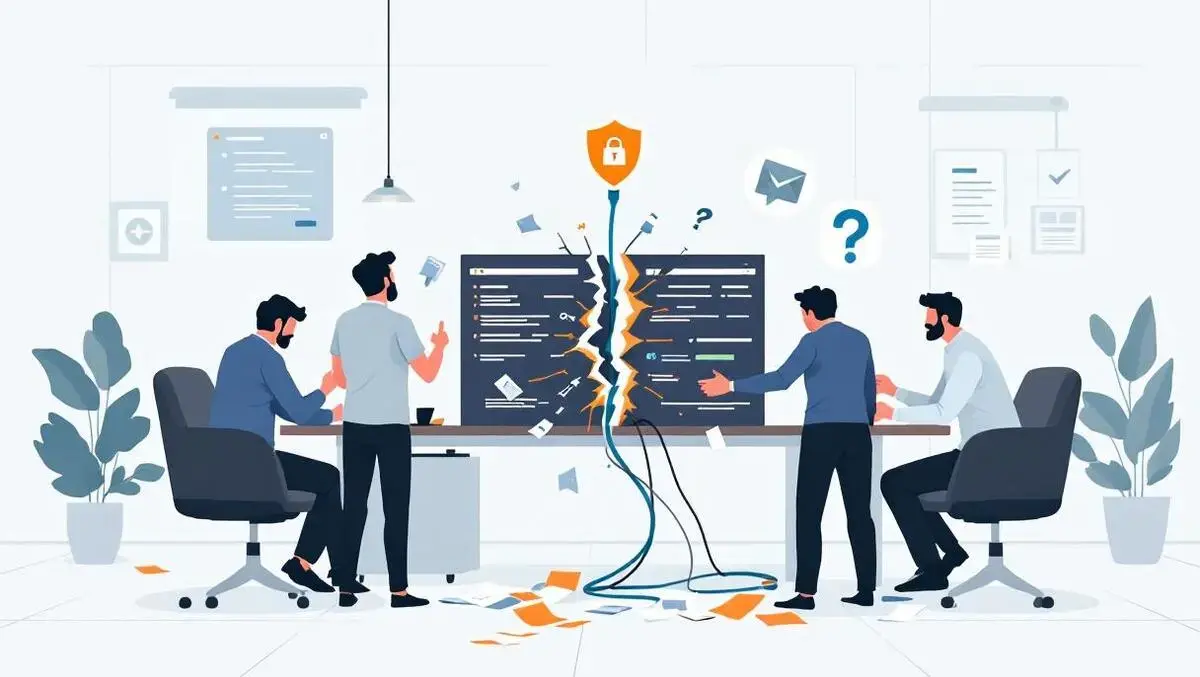
UK workers rank cyberattacks top threat to continuity
Tue, 28th Apr 2026
EcoOnline has published research showing that UK workers now rank cyberattacks and data breaches as the leading threat to business continuity, ahead of physical workplace incidents.
The study surveyed 1,300 workers across the UK and Ireland. Among UK respondents, 42% identified cyberattacks or data breaches as the top threat to business continuity, compared with 27% who cited serious workplace injury or medical emergency. Fire or evacuation-related incidents and physical security threats or unauthorised access each scored 23%.
The findings suggest employees increasingly view digital disruption as part of workplace safety rather than an issue confined to IT departments. At the same time, they point to a gap in organisational readiness: only 30% said they were aware their employer had a crisis plan and understood it well.
That mismatch between perceived risk and preparedness comes as businesses face broader pressure on productivity and retention. The research found that 90% of workers believed a safer workplace made them more productive, while 79% said they would consider leaving a job because of unsafe conditions.
The data also showed that operational risks extend beyond cyber concerns. Nearly a third of UK lone workers, 30%, said they experienced an accident while working alone in 2025, while confidence in employer responsibility fell to 62% from 68% a year earlier.
Stress was the main factor among workers who reported harm linked to work. Of the 39% who said they or a family member had experienced a workplace accident or illness, 61% identified stress as the main cause.
Chemical exposure also rose in the survey. Some 44% of workers now handle chemicals at work, up from 42% in 2025, while efforts to phase out hazardous substances remained unchanged at 62%.
Broader risk
The figures show workers assessing business continuity through a broader lens, with cyber incidents considered alongside injury, evacuation and site security. That shift may challenge companies that still separate digital security, health and safety, and emergency planning into different functions.
Employee views on technology reflected a similar pattern. Some 72% said more digital environment, health and safety tools would make them feel safer, up from 67% in 2025.
Views on artificial intelligence were more mixed. While 47% said AI could improve workplace safety, workers were more likely to call for practical support through training and staffing.
The top requests for safety investment were more employees dedicated to safety, cited by 38%, and more training for all staff, cited by 37%. The responses suggest workers see technology as a support for safety processes rather than a substitute for people.
The findings come against a backdrop of weak productivity in the UK economy. EcoOnline said output per hour worked had fallen 0.5% year on year, adding to concerns that shortcomings in workplace safety may be affecting workforce performance and business growth.
Retention pressure
The retention signal in the research is notable. If nearly four in five workers would consider leaving over unsafe conditions, employers may face a direct link between risk management and their ability to retain staff.
That concern becomes sharper when cyber threats are seen as part of everyday workplace safety. A cyberattack can interrupt operations, undermine staff confidence and expose weaknesses in crisis management just as clearly as a physical incident.
For employers, the survey points to a need for clearer crisis planning and communication. Awareness appears limited, and understanding of response plans is weaker than the level of concern employees express about the range of threats facing their organisations.
The research also suggests workers want safety to be visible in day-to-day operations. Training, staffing and clear procedures ranked alongside digital tools, indicating that employees judge preparedness as much by human support as by systems.
Tom Goodmanson, Chief Executive of EcoOnline, linked safety performance to productivity and confidence at work.
"We know safe workers are productive workers. Not just because accidents create downtime, but because safety directly affects focus and confidence. When the workforce trusts their safety processes, they spend less time compensating for risk and more time doing their jobs well. Connected risk visibility is critical here - giving teams the clarity to act quickly and keep operations moving. Technology aids this journey by supporting better decisions and scaling human expertise, so productivity and protection reinforce each other. The companies that get this right will be the ones that treat safety as a driver of operational readiness, not just a cost of compliance," he said.