Critical Infrastructure stories
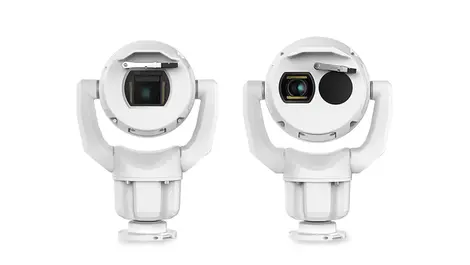
Operators of remote and hazardous sites gain longer-range detection and fewer false alarms as IQSIGHT adds thermal and optical cameras.
Security and compliance concerns are pushing 34% of large UK and US firms to keep critical cloud workloads on the public internet.
Static risk registers can leave boards blind to emerging threats, making it harder to spot failures early and keep critical services running.
Defence contractors could cut manual compliance work as the project aims to automate security checks across operational systems and sensitive networks.
Shipments are projected to rise to 6.6 million units by 2030 as factories and utilities upgrade older wireless kit and add backup links.
The package is aimed at firms scaling AI across multiple sites, where mixed networks and security rules often slow roll-outs and raise risk.
Customers in remote and hard-to-service sites will get one supplier for intrusion detection and cellular cameras after VOSKER folded Reconeyez into Enterprise.
Business systems supporting factories, logistics and utilities remain vulnerable, with Australia accounting for 20 of 23 industrial ransomware incidents in the region.
Australian government and regulated customers can now keep DNS and address data in Sydney as Infoblox expands its local cloud footprint.
Clients facing cyber threats and AI change are the focus as the consultancy adds managed services and larger delivery work.
The research could help security teams close real-world attack paths faster by training AI on verified data from live systems, rather than simulations.
Paper-based workflows can slow deployments and leave public services exposed when cyber incidents or disasters disrupt digital systems.
Australian firms using AI coding agents can now spot software flaws earlier, as CommBank's CodeCheck is offered free to them.
Japan's push for local control of AI and cloud services is driving the alliance, which aims to reduce reliance on overseas-operated platforms.
More remote access and distributed assets are leaving power firms exposed to credential theft, with compromised accounts implicated in 19 per cent of incidents.
Weak segmentation is leaving hospitals and industrial sites exposed, with more than 65,000 consumer devices sitting on critical infrastructure networks.
Rising AI data centre density is forcing insurers and operators to rethink cover as failures could hit customers, financing and directors alike.
Rising costs and labour shortages are pushing utilities to use security systems for faster decisions, not just site protection, a survey shows.
The scheme could turn part of Drax Power Station into one of Britain's biggest AI campuses, with an initial £2.5 billion phase due by 2028.
Experts said the Budget's cyber and AI cash could bolster defences, but warned that outages, governance gaps and power limits may blunt its impact.