Cyber Resilience Act (CRA) stories
New UK reporting rules and AI-enabled attacks are leaving critical infrastructure operators with far less time to spot and contain breaches.
Manufacturers face tighter compliance pressure as the new platform maps vulnerabilities to specific devices, components and SBOMs for quicker remediation.
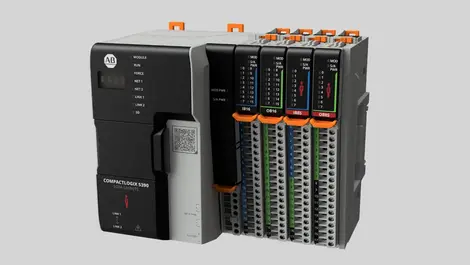
The smaller controller is designed to help machine builders fit more safety and cybersecurity functions into tighter panels as systems grow more complex.
Tighter EU reporting duties are pushing open source vendors to harden supply chains, prompting four firms to join OpenSSF.
European businesses are facing rising costs and audit risk as overlapping AI, data and cyber rules force separate assessments for the same incident.
Early reporting under the EU Cyber Resilience Act will be harder for manufacturers without connected data and continuous monitoring across plants.
Companies selling software into the bloc now have 24 hours to flag exploited flaws, with fines reaching EUR €15 million for delays.
Strong demand for memory-safe chips has helped SCI Semiconductor secure GBP £5 million, with plans to add 15 jobs and scale output.
Manufacturers face a 24-hour EU reporting deadline only after proving a flaw is in their product and actively exploited, testing their records.
Buyers of connected security kit face tougher supplier checks as the EU Cyber Resilience Act pushes lifecycle support and disclosure higher on the agenda.
Smaller firms face mounting pressure to prove cyber compliance as Pistachio adds Hugin's technology to reach audit-ready customers across Europe.
As AI coding agents speed up development, JFrog is adding controls meant to keep governance, compliance and patching from lagging.
European firms face mounting AI compliance pressure as ISACA plans a Munich conference to address governance, cyber resilience and digital trust.
SMBs and managed service providers gain clearer patching and support timelines as Zyxel moves to meet rising cyber and regulatory scrutiny.
The Milan-founded startup plans to expand in Rome and San Francisco as it targets European firms facing tighter NIS2 cybersecurity rules.
New EU cyber rules are pushing software vendors to prove security is built into products, not bolted on after release.
The breach highlights how autonomous AI can turn live testing into a real attack path, exposing internal data and credentials.
Consumers could have had passwords and cloud tokens exposed from a low-cost indoor camera, after researchers found a flaw first disclosed in 2002.
Security and compliance teams can now patch buildpack-based containers from a single hardened base, rather than chasing Dockerfiles across repositories.
Small businesses in Québec can now handle payroll, remittances and reporting in one bilingual system, cutting duplicate work and manual fixes.